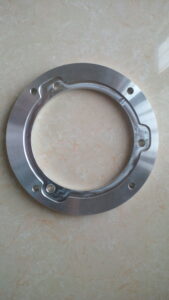
Camping has undergone a profound transformation in recent decades. Once associated primarily with rugged, no-frills outdoor experiences, it has evolved into a diversified, innovation-driven market encompassing high-performance gear, modular setups, and even tech-integrated systems. Behind this evolution lies a quiet but critical contributor: CNC machining. As the camping equipment industry continues to modernize, expand, and diversify, CNC (Computer Numerical Control) machining is playing an increasingly central role in accelerating design innovation, enhancing product durability, and enabling scalable production—all of which are essential for the continued growth and sophistication of this sector.
The modern outdoor consumer is no longer content with just a tent and a sleeping bag. Instead, they demand equipment that is lightweight yet durable, compact yet functional, and rugged yet refined. Whether it’s a foldable stove, a multi-purpose lantern, a water filtration device, or a collapsible shelter frame, today’s camping gear needs to meet exacting standards. Manufacturers face the challenge of designing equipment that not only performs flawlessly in extreme outdoor conditions but is also aesthetically appealing, easy to use, and compatible with an array of accessories and attachments. To meet this challenge, they are increasingly turning to CNC machining.
CNC machining enables designers and engineers to transform digital concepts into physical parts with exceptional precision. Unlike traditional manual methods, which rely heavily on operator skill and are prone to variability, CNC machines are computer-controlled and capable of maintaining tight tolerances across hundreds or even thousands of identical parts. This consistency is especially crucial in the camping equipment industry, where components often need to fit together precisely in modular systems or folding assemblies. A minor misalignment in a hinge or bracket can compromise not just convenience but also safety and structural integrity in the field.
Furthermore, CNC machining supports the use of advanced materials that are becoming increasingly common in outdoor gear. Aluminum alloys, titanium, stainless steel, and engineering plastics like Delrin or PEEK are all popular in the camping sector due to their strength-to-weight ratios, corrosion resistance, and performance under thermal or mechanical stress. These materials, however, are notoriously difficult to shape using traditional tools. CNC machining, equipped with high-speed spindles, advanced tooling, and adaptive CAM software, enables the efficient fabrication of parts from these challenging materials—delivering components that are lighter, tougher, and longer-lasting.
Another key advantage of CNC machining lies in its role as a bridge between product design and mass production. When developing new camping gear, manufacturers often require multiple rounds of prototyping to test functionality, ergonomics, and aesthetic appeal. CNC machining allows for rapid prototyping with production-grade materials and finishes. This shortens development cycles, reduces risk, and speeds up time-to-market—a crucial competitive edge in a consumer-driven industry that sees seasonal demand spikes and ever-shifting trends.
Moreover, CNC machining supports both mass production and small-batch customization. This is especially important in the outdoor gear market, where personalization and niche use cases are gaining popularity. From military-grade tactical equipment to ultralight backpacking kits and family-oriented camping systems, the diversity of consumer preferences calls for manufacturing agility. CNC machining offers the flexibility to produce one-off custom parts or to pivot quickly from one production run to another without the need for retooling or complex fixture changes. This allows brands to cater to a wide range of customer segments without sacrificing efficiency or quality.
Durability is another crucial factor where CNC machining adds enormous value. Camping gear is subjected to a variety of harsh conditions—rain, snow, dust, salt, heat, freezing temperatures, and physical abrasion. Components must be designed not only to survive these conditions but to perform reliably under them. CNC machining produces parts with tight tolerances and high surface quality, reducing wear and friction between moving components. This extends the life of gear and reduces the likelihood of failure in critical applications like cooking systems, hydration systems, and structural supports for tents and shelters.
In recent years, there has also been a notable trend toward the integration of electronics into camping gear. Solar-powered lights, GPS-enabled navigation tools, and even portable weather stations are now part of many campers’ arsenals. These high-tech systems require enclosures, mounts, heat sinks, and internal mechanical components that demand micrometer-level precision. CNC machining is particularly well-suited for producing these parts, ensuring compatibility with circuit boards, connectors, and protective casings. The ability to machine complex internal geometries also enables the production of waterproof housings and vibration-resistant mounts—essential features in outdoor environments.
From a sustainability standpoint, CNC machining also brings measurable benefits. As outdoor gear brands increasingly align with eco-conscious values, minimizing waste and promoting product longevity have become central to their manufacturing strategies. CNC machining, thanks to its subtractive precision, produces less waste material compared to many alternative manufacturing methods. And because CNC-machined parts are typically more durable and serviceable, they contribute to the creation of gear that lasts longer and can be repaired rather than discarded. This resonates strongly with consumers who value both performance and environmental responsibility.
As the camping equipment industry scales globally, CNC machining also enables localization and on-demand production. By setting up small-scale CNC workshops close to distribution hubs, companies can reduce inventory risk and respond more quickly to regional demand. This decentralization is particularly valuable in a supply chain environment still recovering from pandemic-era disruptions. In the same vein, CNC machining plays a pivotal role in ensuring quality control and traceability—both of which are vital when producing safety-critical components for load-bearing or fire-involved applications in camping gear.
KLARM Machining, for instance, has recently expanded its CNC capabilities to support outdoor gear manufacturers specifically. The company now works closely with designers of foldable furniture, gas-powered devices, and modular shelter systems to produce components such as locking mechanisms, lightweight supports, and ergonomic handles. These collaborations are enabling new generations of gear that combine rugged utility with sleek design, all made possible through CNC’s precision and repeatability.
Looking forward, the role of CNC machining in the camping equipment industry is only expected to grow. As consumer expectations rise, as outdoor experiences become more data-driven and technology-enhanced, and as global environmental concerns reshape product design, manufacturers will need to deliver better-performing, smarter, and more sustainable products—at speed and scale. CNC machining stands at the crossroads of all these requirements, offering not just a production method but a competitive advantage.
It is not just about cutting metal or shaping plastic; it’s about enabling ideas to become functional, field-ready solutions. Whether it’s a mountaineer relying on a titanium pot, a camper using a precision-engineered folding knife, or a survivalist depending on a robust water purifier, the unseen influence of CNC machining is there—in every precise thread, smooth action, and dependable fit. And as the camping equipment industry continues to explore new frontiers, it will find in CNC machining not just a tool, but a trusted partner in innovation.
Let me know if you’d like this tailored for a brand website, investor communication, or media placement.