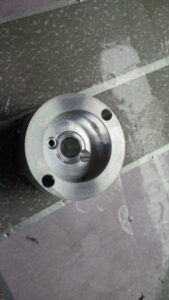
In an age of digital everything, where convenience often overshadows experience, the allure of camping has surged—not as a nostalgic retreat, but as a reinvention of how people connect with nature, technology, and themselves. But this modern renaissance of the outdoors is not just about tents and campfires. It’s about gear that’s smarter, lighter, and tougher than ever. And at the heart of this transformation lies something not immediately visible to the average adventurer: precision machined parts.
Camping equipment today isn’t what it used to be. It has evolved into a high-performance sector shaped by demanding customers, constant innovation, and relentless competition. From aerospace-grade aluminum tent poles to compact water filters with micron-level accuracy, from stove valves that must regulate gas flow in sub-zero temperatures to folding chairs that need to hold weight without adding it—every piece of outdoor equipment now relies on a foundation of mechanical excellence.
The result? An industry-wide, insatiable demand for precision machined components.
This demand is not an accident, but the outcome of multiple intersecting trends. At the consumer level, expectations have changed dramatically. The casual camper might once have accepted a heavy pack, fiddly gear, or unreliable stoves as part of the trade-off for an outdoor escape. Today’s customer, however, wants products that are as streamlined as their tech gadgets. Lightweight, compact, rugged, modular, ergonomic—these have become the new non-negotiables.
To meet these expectations, gear manufacturers have turned to materials and designs traditionally found in industries like aerospace, medical devices, and automotive engineering. These sectors have long depended on precision machining to create parts with sub-millimeter tolerances, specialized finishes, and robust performance in extreme environments. Now, those same machining principles are being applied to the outdoor world.
A simple example illustrates this shift. Consider the adjustable valve on a camp stove. It’s a small, seemingly trivial component. But it has to do a lot: seal gas properly, allow precise control of flow, resist corrosion, work in the cold, and do so reliably over hundreds of uses. Such functionality requires exact threads, perfectly machined surfaces, and durable materials—all of which can only be achieved through high-precision CNC machining or Swiss turning processes.
And this is just one part of one product.
Scale that need across hundreds of product categories—portable solar panels, ultralight shelters, trekking poles, water filtration systems, modular cookware, collapsible furniture, and even emerging battery-powered gear—and the picture becomes clear. Precision machined parts are no longer an exception in camping gear; they are quickly becoming the standard.
Manufacturers are also under pressure to make their products more compact and multifunctional. That collapsible knife isn’t just a knife anymore; it’s also a screwdriver, a firestarter, and maybe even a charging dock. This kind of design complexity demands components that fit and move together seamlessly. Any misalignment, inconsistent dimension, or machining flaw could mean failure—or at best, a bad user experience. In the harsh environment of the outdoors, there’s no room for manufacturing sloppiness. Precision is survival.
Moreover, these parts have to endure the kind of abuse that few consumer products ever see. They’re slammed against rocks, soaked in rain, covered in sand, frozen in snow. And they have to keep working—without squeaks, leaks, or jamming. That means machined surfaces must be smooth to reduce wear, threads must maintain exact fits, and tolerances must be tightly controlled to ensure seals remain effective even after years of repeated use. Once again, this level of durability is only achievable through advanced machining techniques, not mass injection molding or generic die casting.
As new brands enter the camping market and legacy brands double down on innovation, the design process has also become more agile. Rapid prototyping, short production runs, and iterative testing cycles are the norm. Here too, precision machining plays a pivotal role. CNC machining allows for quick turnaround of new designs, supporting creative freedom while ensuring functional accuracy. A designer can take a CAD file and, often within hours, hold the first metal version in their hands. That kind of responsiveness is critical for companies trying to win in a trend-driven market.
But the demand for precision isn’t only about functionality. Aesthetic expectations have risen as well. Outdoor gear today is a lifestyle symbol, not just a utility. Machined parts—anodized, brushed, laser-etched—offer a premium feel and look that injection-molded plastic can’t match. The smooth glide of a titanium slider, the click of a perfectly mated hinge, the confidence of a solid aluminum locking mechanism—these small details define user experience and brand perception. They also command higher price points, which is why manufacturers invest in machining not just for function, but for feel.
Environmental responsibility is another key driver. Consumers increasingly demand sustainable gear, and precision machining supports this in several ways. First, machined parts are typically longer-lasting, reducing the need for replacements. Second, many are made from recyclable metals like aluminum or stainless steel. Third, precision allows for repairability—swapping out a worn pin or hinge rather than discarding the whole item. And finally, the controlled, subtractive nature of CNC machining means less wasted material compared to other methods.
Even supply chain logistics point toward precision machining as a strategic choice. The ability to produce consistent, interchangeable components in decentralized facilities supports flexible production models. Brands can scale globally without depending on a single mass-production hub, which is increasingly important in a world shaped by shipping delays, tariffs, and regional disruptions. Precision machining ensures that a component made in one country can be integrated into an assembly elsewhere without compatibility issues.
The rise of integrated technology in gear is also playing a role. Campers are increasingly using gear that includes sensors, displays, power banks, or even connectivity features. All of these additions require machined housings, mounts, and fixtures that can securely interface with electronics. Whether it’s an aluminum bracket that supports a solar panel or a water-resistant housing for a battery, the underlying requirement remains the same: precision-machined parts that ensure reliability, performance, and integration.
KLARM Machining and similar firms have recognized this trend early. By expanding their services to include outdoor equipment components, they are meeting a growing and largely underserved need. These machining partners are not only supplying parts; they’re co-developing solutions, helping gear brands make the leap from concept to marketable product quickly and efficiently. Through advanced software, high-tolerance equipment, and material expertise, they are helping redefine what outdoor equipment can be.
In the end, precision machining is not just a manufacturing method—it’s a mindset that fits perfectly with the evolution of the outdoor industry. As the gear itself becomes smarter, sleeker, and more capable, it demands components that match its ambition. The camping equipment industry’s unprecedented demand for precision machined parts is not a passing trend; it’s the new foundation upon which the next generation of outdoor experiences will be built.
And for every camper who marvels at how a tent sets up in seconds, how a stove ignites without fuss, or how gear just works—there’s a machined part making that possible.