The global electrification movement has shifted from ambition to reality. As electric vehicles roll off production lines in ever-increasing numbers and renewable energy grids stretch to power homes and cities, lithium-ion batteries have become the unsung heroes of the green revolution. Yet, just as critical as the batteries themselves is the infrastructure needed to recover them at end-of-life. Enter the fast-rising sector of power battery recycling—an industry that is now exerting significant pressure on another: precision machining.
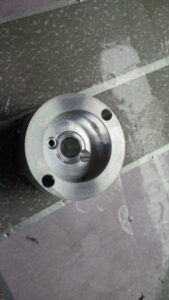
At first glance, battery recycling may appear to be a largely chemical or materials science domain, revolving around recovery of valuable metals like lithium, cobalt, and nickel. However, the reality is much more mechanical. Before any metal is extracted, and before any chemical process begins, used batteries must be safely transported, disassembled, shredded, sorted, and processed by machines that are both structurally robust and surgically precise. Each of these machines is filled with hundreds—sometimes thousands—of components that must meet extremely tight tolerances. The result is a rapidly growing and highly specialized demand for precision machined parts.
This demand is not a temporary trend, but a structural shift. As battery waste grows exponentially—due in part to EV adoption and increasing use of stationary storage systems—so too does the need for safe, efficient, and high-throughput recycling systems. These systems are no longer simple, brute-force machines. They are complex, automated, sensor-driven operations that combine mechanical, electrical, and chemical engineering in real-time. Each mechanical movement—whether it’s opening a battery pack, separating a cathode from an anode, or directing electrolyte fluids—requires motion control, sealing, cutting, and structural integrity that can only be delivered by precisely manufactured parts.
One of the fundamental drivers of this demand is safety. Power batteries are energy-dense, volatile devices. Mishandling during disassembly or crushing can lead to fires, explosions, or toxic leaks. The mechanical components that manage these processes must operate with flawless accuracy. A misaligned blade, an imprecise clamp, or a leaking valve is more than a quality issue—it’s a risk to equipment, facilities, and human life. Precision machined components—produced with repeatable, sub-millimeter tolerances—are essential to ensuring that such risks are minimized.
Moreover, battery recycling equipment must handle a vast diversity of battery formats and chemistries. From cylindrical cells and pouch formats to solid-state prototypes, no two battery streams are exactly alike. This variability requires mechanical systems that are both flexible and exact—often involving adjustable fixtures, interchangeable grippers, or modular assemblies. These systems cannot rely on off-the-shelf parts; they demand custom-machined components tailored to each task. As such, precision machining providers are being drawn into close partnership with recycling OEMs to co-develop parts that meet exact functional and regulatory requirements.
Another aspect driving demand is throughput. Industrial-scale battery recycling operations aim to process thousands of tons of material annually. To do so, they need machines that can operate continuously, under high loads, with minimal maintenance. Components like rotary shafts, high-speed cutting blades, gearboxes, and filtration chambers are exposed to constant vibration, abrasive particles, corrosive fluids, and temperature fluctuations. The only way to guarantee long-term reliability in such an environment is through high-quality machining. Tolerances must remain consistent across production batches. Materials must be carefully selected and cut to maintain their structural properties. Finishes must be smooth enough to reduce wear but rugged enough to endure impact. This level of performance is only possible through precision machining.
As automation and AI increasingly enter the recycling process—enabling smarter sorting, real-time diagnostics, and predictive maintenance—the mechanical interface between sensors and machines becomes just as critical. These interfaces depend on machined parts with exact geometries, alignment points, and tolerances tight enough to ensure consistent data and control feedback. A camera housing, sensor mount, or actuator joint that deviates by even a fraction of a millimeter can cause incorrect readings or mechanical missteps. In a data-driven recycling environment, machine-level precision becomes system-level intelligence.
Global regulations are also playing a role in shaping this demand. Battery recycling facilities are now expected to meet rigorous safety and environmental standards, which include the traceability and documentation of machine parts. From CE and ISO certification to local compliance frameworks, every component must be verifiable—its material origin, its production history, its tolerancing and finishing—all need to be documented. Precision machining, with its highly traceable digital workflows and integrated quality control systems, fits naturally into this compliance ecosystem. Manufacturers can track every part through serialized engraving, inspection reports, and digital production logs—something mass-production casting or forming processes cannot as easily offer.
Equally important is the lifecycle of the machinery itself. Unlike consumer goods, battery recycling systems are capital-intensive investments expected to operate for decades. Their internal components—many of which are machined from stainless steel, titanium, or engineered polymers—must be repairable, replaceable, and upgradable. CNC-machined parts not only offer higher initial performance, but also ease of service and long-term adaptability. A failed valve seat or mounting bracket doesn’t mean scrapping an entire unit—it means ordering a replacement part that can be made precisely to specification, often on-demand, by the original machining partner.
The economics of this equation are hard to ignore. As battery material prices fluctuate, the efficiency of recycling becomes a major determinant of profitability. Even a 1% increase in material recovery efficiency, enabled by more precise separation or fluid control, can translate into millions of dollars of value for a high-volume facility. Precision machined parts—used in sorting arms, pressure vessels, particle separators, or electrolyte pipelines—directly affect this efficiency. Their role is not passive; it is integral to system performance and financial viability.
KLARM Machining, one of the foremost precision part suppliers in China, has noted a sharp rise in inquiries and contracts from companies involved in battery recycling. The parts requested are not simple brackets or bolts, but complex multi-axis components, often combining intricate internal geometries, threading, and material requirements that few other manufacturing processes can achieve. These are mission-critical elements, many operating in contact with corrosive fluids or volatile particles, where the margin for error is virtually zero.
Perhaps the most forward-looking factor in this demand surge is innovation itself. Battery technologies are not static. Chemistries are evolving, designs are changing, and recycling methods are being reinvented. With each new shift comes a new machine design—and with it, a new set of components to be designed, prototyped, and manufactured. Precision machining is not only keeping up with these innovations—it is enabling them. It allows for agile iteration, fast prototyping, and high-fidelity translation of new concepts into production-ready parts.
In this sense, the demand for precision machined parts isn’t just a reflection of technical need—it’s a symptom of growth, dynamism, and transformation. The rise of battery recycling represents a convergence of sustainability, technology, and industrial capability. But it also represents a shift in manufacturing expectations: away from volume-for-volume’s sake, and toward precision-for-purpose.
As recycling becomes more central to the global battery economy, and as facilities scale and compete on both efficiency and reliability, the importance of precision components will only grow. What we are witnessing is not a secondary market or auxiliary service, but a foundational requirement for the future of energy—and machining shops, armed with digital tools, material science, and ultra-tight tolerances, are rising to meet that future with remarkable speed and skill.